Secure Communication Method in Wireless Sensor Networks
Keywords:
Wireless Sensor Networks (WSNs), security threats, machine learning, detection mechanism, WSN attacksAbstract
Among the security risks of Wireless sensor networks (WSNs) include unauthorized access, distributed denial of service (DDoS), eavesdropping, node, capture, wormhole assault, Sybil attack. However, the current attack detection methodologies in WSNs should still be further defined. This work intends to address these issues by means of an efficient communication detection method specifically for WSN assaults, investigated and selected, applied, and thoroughly assessed against significant criteria like accuracy, precision, and processing time. Important phases of an experimental approach include data collecting, preprocessing, feature extraction, model training, testing and assessment. The WSN DDoS attacks are identified using Support Vector Machine (SVM), K-Nearest Neighbors (KNN), and Artificial Neural Network (ANN) systems. With outstanding accuracy and precision, KNN is the most successful classifier of the ones used in identifying WSN DDoS attacks. KNN specifically obtains an accuracy of 99.63% and a precision of 99.64%, hence demonstrating its great capacity in precisely detecting attacks while lowering false positives. With an average elapsed time of 91.05 seconds to manage large datasets, KNN also shows good processing. The results of the research significantly contribute to strengthening WSN security by providing insightful analysis of the relative performance of several detection techniques. KNN's superiority in terms of accuracy, precision, and computing economy over SVM and ANN emphasizes its potential for practical application in securing wireless sensor networks against a wide range of threats. These results provide vital insights on choosing ideal detection mechanisms to improve the robustness and security resilience of WSNs and underwater sensor communication networks against a dynamic environment of changing security threats, consequently leading researchers and practitioners.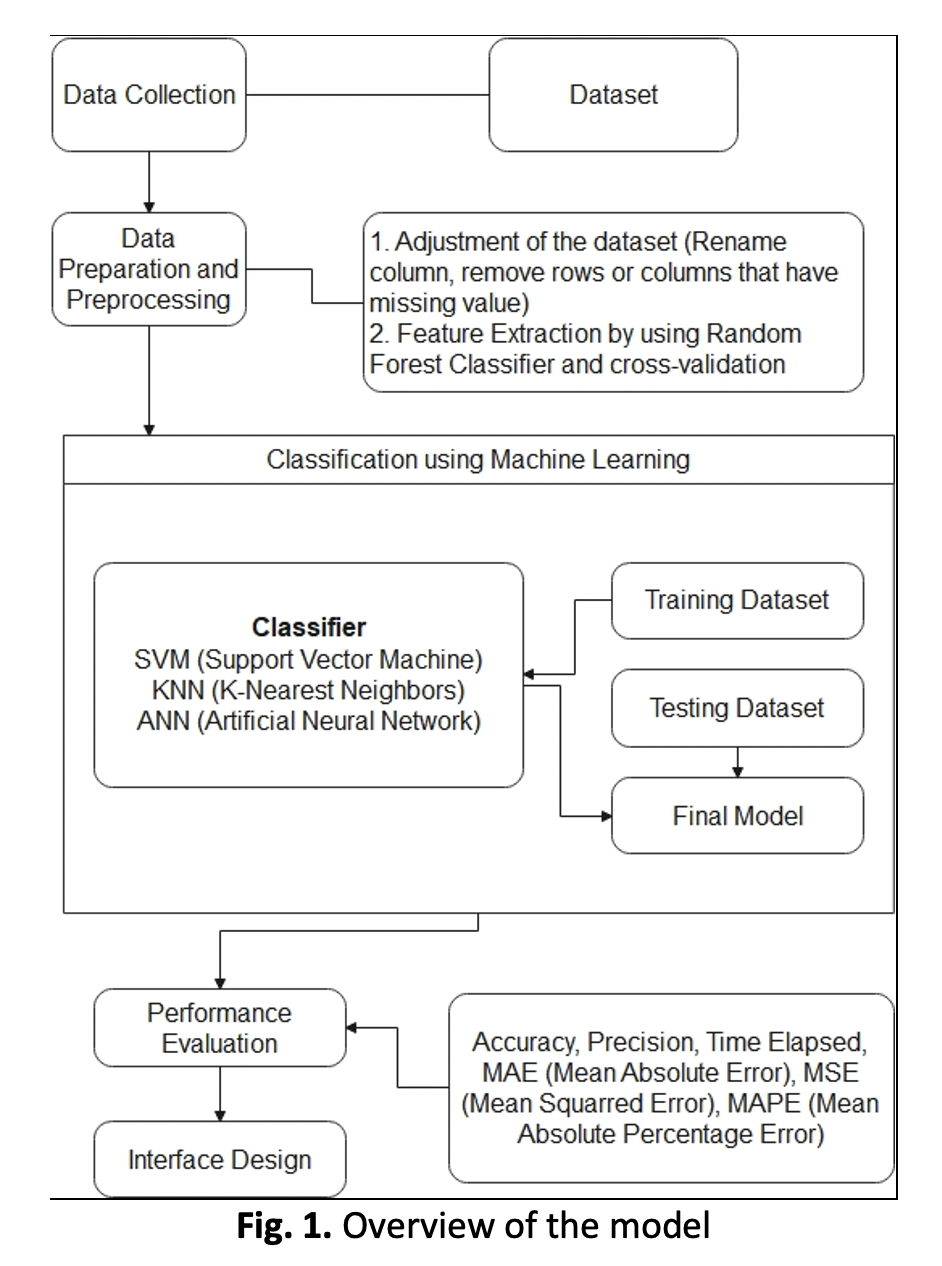
Downloads
Published
2025-12-08
How to Cite
Yew Chun, T., Fattah, S., A. Wahab, S. H., Saad, N., & Yousif Mohammed, W. A. (2025). Secure Communication Method in Wireless Sensor Networks. Journal of Advanced Research in Applied Mechanics, 144(1), 11–27. Retrieved from https://semarakilmujournal.com.my/index.php/aram/article/view/137
Issue
Section
Articles

 "SHARE YOU KNOWLEDGE FOR A BETTER TOMORROW"