
Predicting the Influence of Densification on The Flammability Properties of Cross-Laminated Timber Using Random Forest Model

Authors

  • Charles Michael Albert Faculty of Tropical Forestry, Universiti Malaysia Sabah, Jalan UMS, 88400 Kota Kinabalu, Sabah, Malaysia
  • Liew Kang Chiang Faculty of Tropical Forestry, Universiti Malaysia Sabah, Jalan UMS, 88400 Kota Kinabalu, Sabah, Malaysia

Keywords:

densification, cone calorimetry, fast-growing timber, machine learning, random forest

Abstract

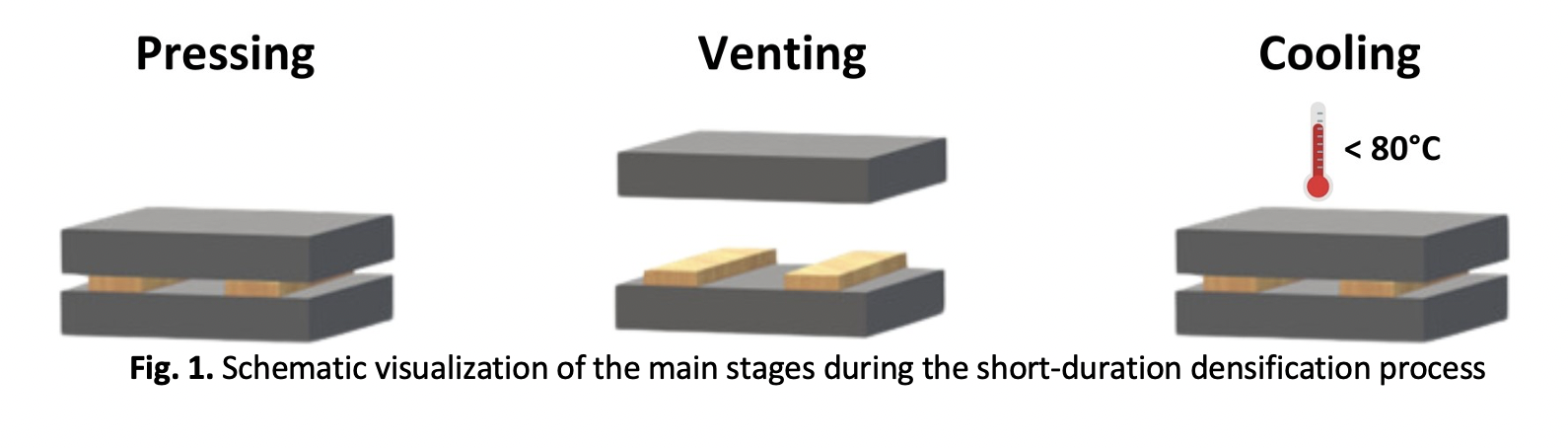
Timber, a popular construction material, has limited application due to its vulnerability to fire. Hence, the flammability behaviour of timber is continuously studied to enhance its fire resistance. This study introduces a short-duration densification process that compresses low-density timber, enhancing its physicomechanical and flammability properties and making it suitable for heavy-duty applications. The objective of this study is to assess the effect of compression ratios on the heat release rate (HRR) and total smoke production (TSP) of the cross-laminated timber (CLT) manufactured from the laminas of Paraserianthes falcataria, a low-density, fast-growing timber species. The laminas were compressed at varying compression ratios (0% (control), 40%, 50%, and 60%), processed into CLT panels, and subjected to cone calorimeter test. The findings indicated that increasing compression ratios significantly enhanced density, whereas compressing the laminas at 60% resulted in a density improvement of up to 142.68%. Cone calorimeter tests revealed that incremental 10% increases in compression ratios improved flammability properties, with 60% compression ratio significantly reducing HRR and TSP. Furthermore, this study developed predictive models using random forest approach to estimate the HRR and TSP of CLT manufactured from laminas compression at varying compression ratios. By utilizing advanced regression approaches, these models provide valuable insights into the heat spread and smoke generation behaviour of CLT, potentially improving the accuracy of predictions for essential fire safety parameters.

Author Biographies

Charles Michael Albert, Faculty of Tropical Forestry, Universiti Malaysia Sabah, Jalan UMS, 88400 Kota Kinabalu, Sabah, Malaysia

charles_michael_albert_df22@iluv.ums.edu.my

Liew Kang Chiang, Faculty of Tropical Forestry, Universiti Malaysia Sabah, Jalan UMS, 88400 Kota Kinabalu, Sabah, Malaysia

liewkc@ums.edu.my

Downloads

Published

2025-12-08

Issue

Section

Articles