Biodiversity of Apocrita (Hymenoptera) in Banting Oil Palm Plantations: A Study of Species Richness and Abundance
Keywords:
Hymenoptera, Apocrita, oil palm, diversity, abundanceAbstract
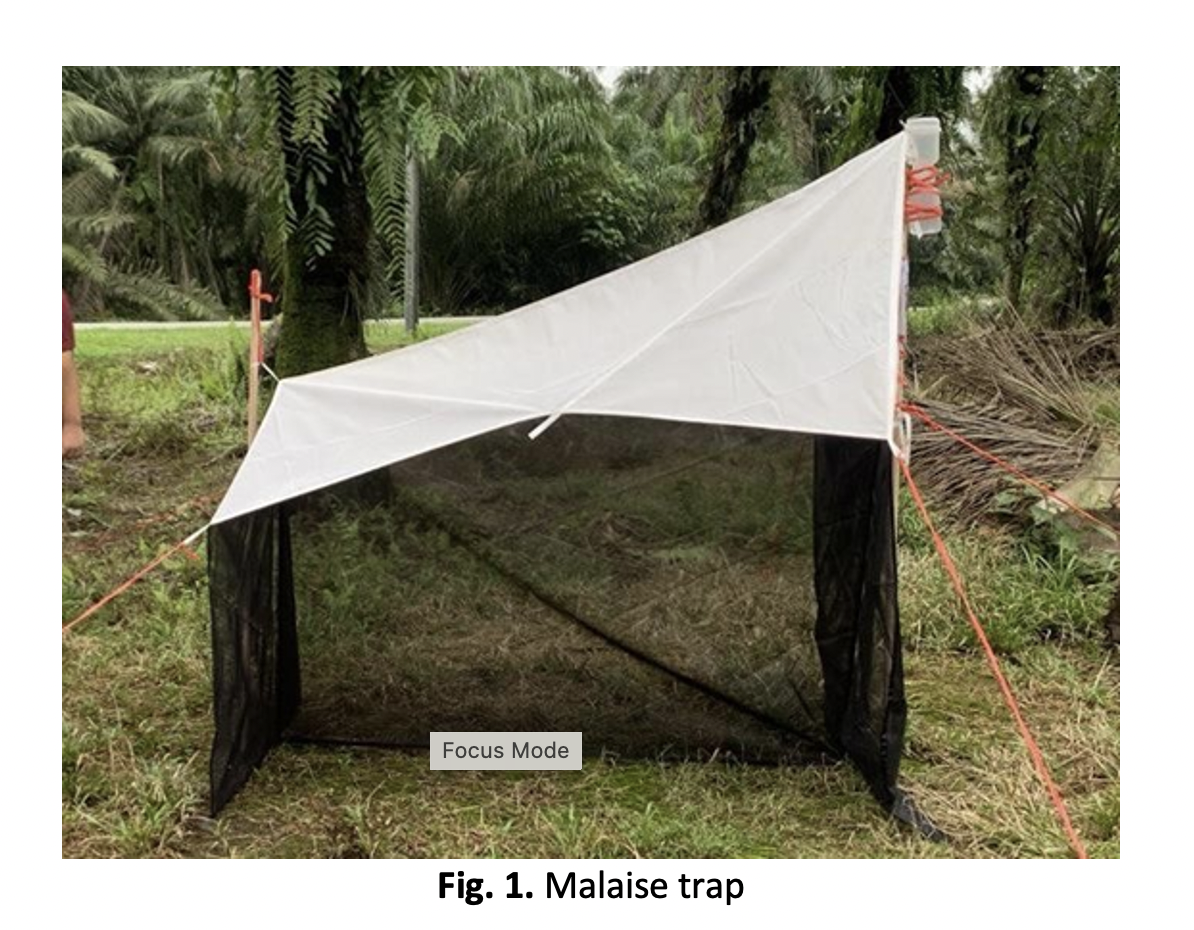
Hymenoptera is a diverse and large group of insects that is divided into suborder Symphyta and Apocrita, including bees, wasps, ants and sawflies. To date, there has been no study on Apocrita insects inhabiting the oil palm plantations in Banting. The establishment of oil palm plantations can lead to the destruction of natural habitats, potentially affecting both plant and animal biodiversity. Consequently, there are concerns that oil palm cultivation may have negative ecological impacts. The objectives of this study were to determine the diversity and abundance of suborder Apocrita at Oil Palm Plantation, Banting and to compare its diversity and abundance at three different areas, inner (Trap 1), middle (Trap 2) and outer (Trap 3). A Malaise trap was installed at each sampling site, and insects were collected and identified after one month. Biostatistical parameters such as Shannon-Wiener diversity index (H'), evenness index (E'), and Margalef richness index (R') were used to identify abundance, evenness and richness of the family Apocrita. From the results obtained, the most abundant Apocrita found was from Trap 1, with 1767 individuals collected, followed by Trap 2 and Trap 3, with 183 and 2 individuals, respectively. Trap 3 exhibited the highest evenness index, with E' = 1.000, signifying a perfectly even distribution where all species were equally abundant in the outer area compared to Trap 1 and Trap 2 with E’=0.231 and E’= 0.312. The Margalef richness index (R'), showed the highest value of R' = 2.006 in Trap 1, suggesting that the greatest species richness was observed there with 105 morphospecies while for Trap 2 and Trap 3, there were only 16 and 2 morphospecies found. This study suggests that Apocrita abundance is higher in the inner areas of the oil palm plantation compared to the middle and outer areas. This study is important as it provides insights into the potential ecological impacts of oil palm plantations and contributes to the improvement of sustainable agricultural practices. Moreover, certain Apocrita species may benefit agriculture by serving as pollinators and natural enemies of crop pests.