Exploring The Challenges of Battery Energy Storage System Integration in Solar-Powered Manufacturing: A Case Study
Keywords:
Battery energy storage, solar system, BESS, manufacturing, thematic analysisAbstract
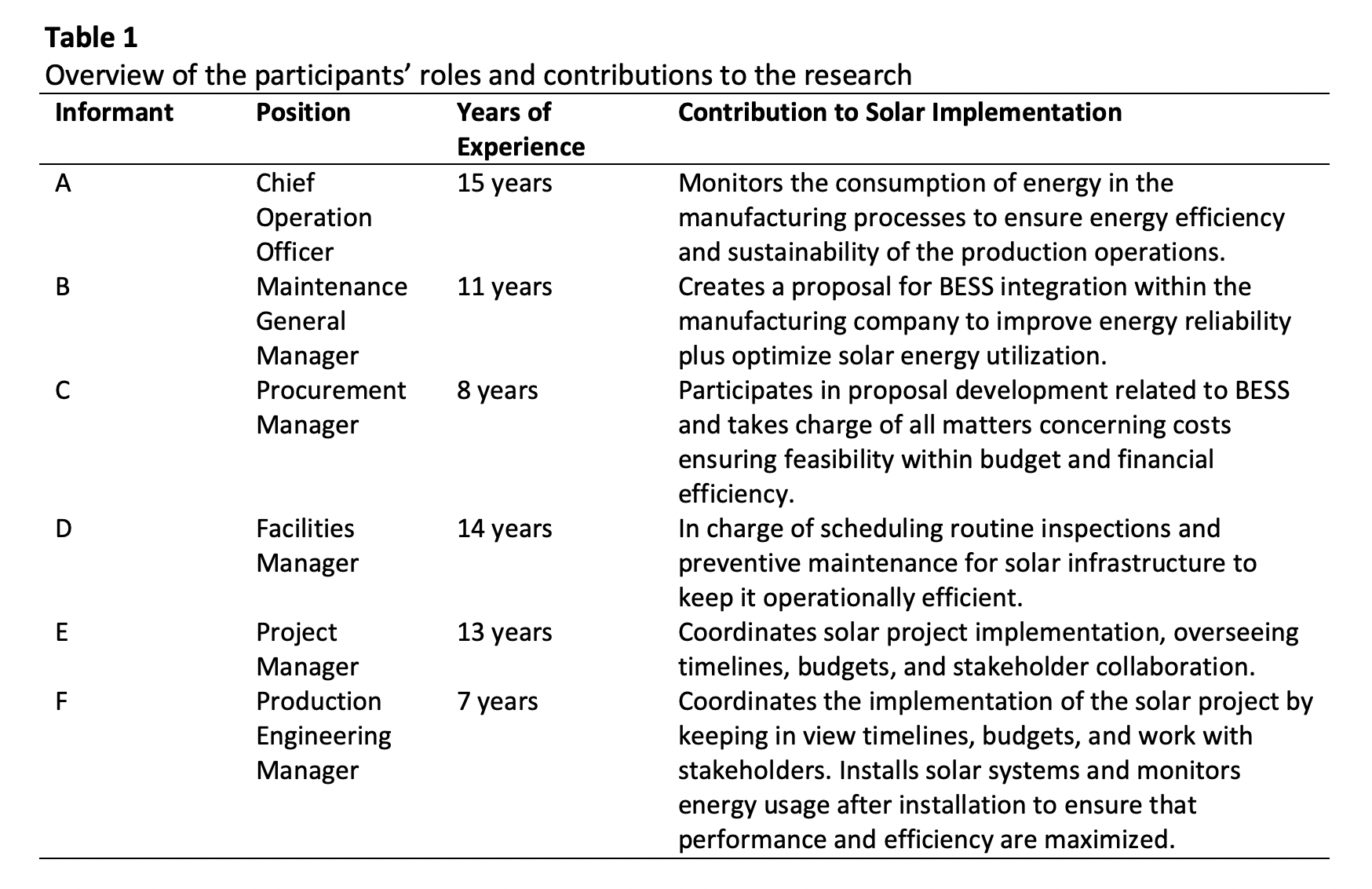
The integration of Battery Energy Storage Systems (BESS) in solar-powered manufacturing is gaining attention as a means to enhance energy reliability and sustainability. However, BESS adoption remains limited despite its potential, particularly in industrial settings. This study explores the key barriers hindering BESS integration in solar manufacturing companies in Malaysia. Employing a qualitative case study approach, semi-structured interviews were conducted with six managerial-level informants with experience in solar-powered manufacturing and energy storage initiatives. Thematic analysis revealed five main challenges, namely Theme 1: Financial Barriers (high initial costs, long payback periods, and maintenance expenses), Theme 2: Technical Difficulties (battery lifespan, limited surplus energy, storage capacity, integration compatibility, and safety risks), Theme 3: Regulatory and Policy Limitations (ambiguity in government policies and lack of incentives), Theme 4: Operational Issues (lack of awareness, lack of technical expertise, internal resistance, and limited access to benchmarking data), and Theme 5: Environmental and Sustainability Concerns (battery recycling, battery disposal, and resource extraction). These findings underscore the need for clearer regulatory frameworks, financial incentives, capacity-building, and sustainable lifecycle management of battery systems. This study offers theoretical and practical insights to support policymakers, energy stakeholders, and manufacturers in facilitating the successful integration of BESS to achieve a resilient, cost-effective, and sustainable energy future.