
Surface Modification of Silane-functionalized Cellulose Aerogel for Effective Oil-Water Separation

Authors

  • Hatika Kaco Education & Advanced Sustainability (EdAS) Unit, Kolej PERMATA Insan, Universiti Sains Islam Malaysia, 71800, Nilai, Negeri Sembilan, Malaysia
  • Ahmad Faiz Ahmad Hamdan Kolej PERMATA Insan, Universiti Sains Islam Malaysia, 71800, Nilai, Negeri Sembilan, Malaysia
  • Hazmi Hariz Haza Hafiz Kolej PERMATA Insan, Universiti Sains Islam Malaysia, 71800, Nilai, Negeri Sembilan, Malaysia
  • Mohd Shaiful Sajab Department of Chemical and Process Engineering, Faculty of Engineering and Built Environment, Universiti Kebangsaan Malaysia, 43600, Bangi, Selangor, Malaysia

Keywords:

Chemical vapour deposition, freeze-dried cellulose aerogel, porous structure, silanation, waste cooking oil

Abstract

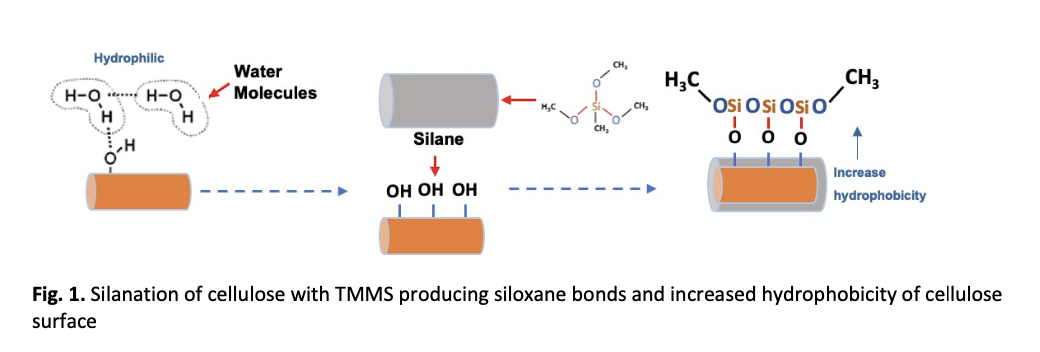
Contamination of water has intrigued exceptionally deliberation has threatened towards global society and increasing concern to the discharge of industrial wastewater and oil leakage. This may lead to various catastrophic consequences on ecosystem and climate change. Meanwhile, renewable, economically viable, and abundantly accessible biomass presents an attractive feedstock option for various industrial applications. The biopolymer category, predominantly comprised of polysaccharides, offers nearly boundless polymeric raw materials characterized by exceptional structure and properties. In this study, a biodegradable three-dimensional porous structure cellulose microbeads was successfully fabricated, enhancing their properties through a facile dropping technique. The microbeads underwent surface modification through a silanation process utilizing trimethoxymethylsilane (TMMS) as the silane agent. Subsequently, the surface-modified microbeads were subjected to an oil-water separation process through adsorption study. Results indicated that microbeads derived from cellulose-based exhibited highly porous structure. Chemical properties of the microbeads revealed from FTIR spectrum analysis confirmed the presence of TMMS in the cellulose matrix along with evidence of silanation using TMMS. The thermal properties of silanated cellulose aerogel microbeads show that is has better thermal degradation and thermal stability.  The oil/water separation study presented that silane-functionalized microbeads has better ability in attract oil. Silanation also balances enhanced hydrophobicity and pore preservation of cellulose aerogel. The facile methodology employed for fabricating cellulose-microbeads, functionalized with silane for oil and water separation, showed promising and effective applications in water treatment. Moreover, this approach aligns with sustainability goals by effectively utilizing biomass resources. Therefore, this study is expected to expand the chain of high value-added products and green growth for sustainability, which is in line with key principles of National Biomass Strategy 2020 and Sustainable Development Goals 2030 by United Nations.

Author Biography

Hatika Kaco, Education & Advanced Sustainability (EdAS) Unit, Kolej PERMATA Insan, Universiti Sains Islam Malaysia, 71800, Nilai, Negeri Sembilan, Malaysia

hatikakaco@usim.edu.my

Downloads

Published

2026-04-08

Issue

Section

Articles