Modelling The Relationship Between Social Infrastructure Project Success Factor And Their Criteria In Malaysia
Keywords:
Social Infrastructure projects, Project success factors, Project success criteria, Structural equation modellingAbstract
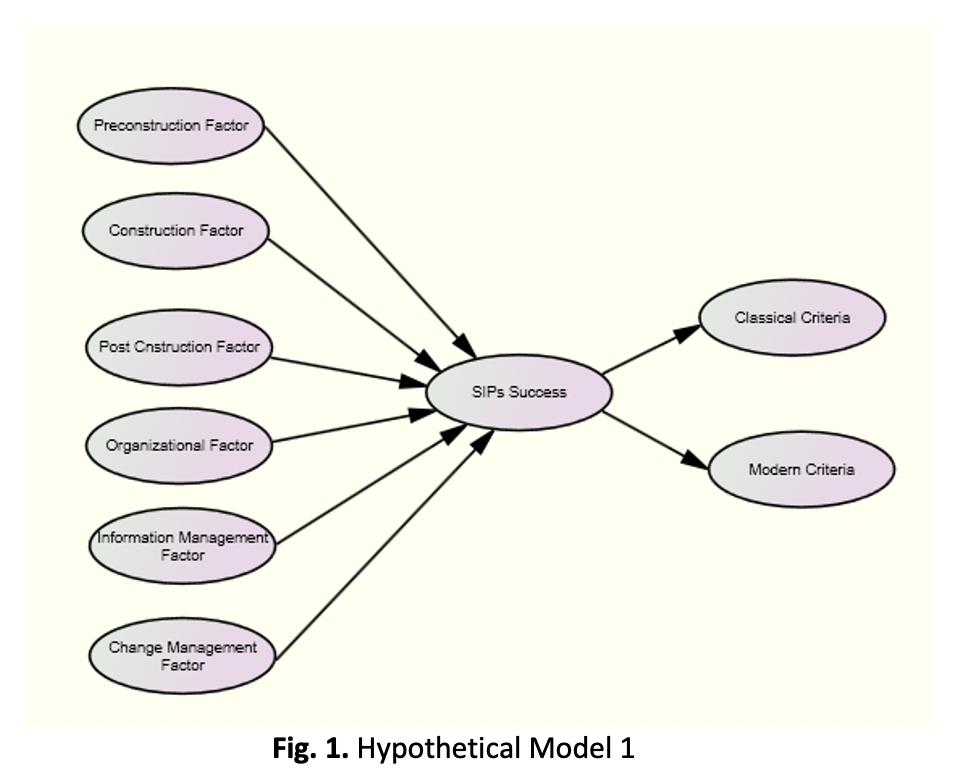
Social infrastructure projects (SIPs) are central to social progress and considered to be an important element that influences the quality of life of new community members in the context of urban planning. This idea is crucial as the Malaysia government focuses on the effort to transform Malaysia into a high-income nation because life quality is an important indicator of the population’s general welfare. Understanding the relationship between SIPs success factors and their criteria could help project managers focus on the control of key factors by allocating reasonable resources to achieve the success as measured by predetermined criteria. Despite the topic’s importance, SIPs studies seem to be absent from the research agenda, particularly with respect to the relationships between SIPs success factors and their criteria. In this study, structural equation modelling (SEM) is employed to model the relationship between SIPs success factors and their criteria. The results demonstrate a significant positive relationship between (1) the post-construction factor and both the classical and modern criteria and (2) the change management factor and both the classical and modern criteria. The results provide a useful reference that enables SIPs-related practitioners to focus on fewer factors and criteria to achieve successful outcomes.