

Impact of Seismic Design on Steel Reinforcement and Cost of Structural Works for Medium Rise Apartment

Authors

  • Nur Shairah Zulkhibri1 Faculty of Civil Engineering Technology, Universiti Malaysia Pahang Al-Sultan Abdullah, 26300 Gambang , Pahang, Malaysia
  • W. Wallinton Faculty of Civil Engineering Technology, Universiti Malaysia Pahang Al-Sultan Abdullah, 26300 Gambang , Pahang, Malaysia
  • M. R. M. Azmi Faculty of Civil Engineering Technology, Universiti Malaysia Pahang Al-Sultan Abdullah, 26300 Gambang , Pahang, Malaysia
  • S. N. C. Deraman Department of Civil Engineering, Kulliyyah of Engineering Internation Islamic University Malaysia, 51300 Kuala Lumpur, Malaysia
  • S. A. H. S. Mustapha Department of Quantity Surveying, Faculty of Architecture, Planning, and Surveying, Universiti Teknologi Mara, 32610 Seri Iskandar, Perak, Malaysia
  • Mohd. Irwan Adiyanto Faculty of Civil Engineering Technology, Universiti Malaysia Pahang Al-Sultan Abdullah, 26300 Gambang , Pahang, Malaysia

Keywords:

Cost engineering, Eurocode 8, peak ground, acceleration, seismic design, soil type

Abstract

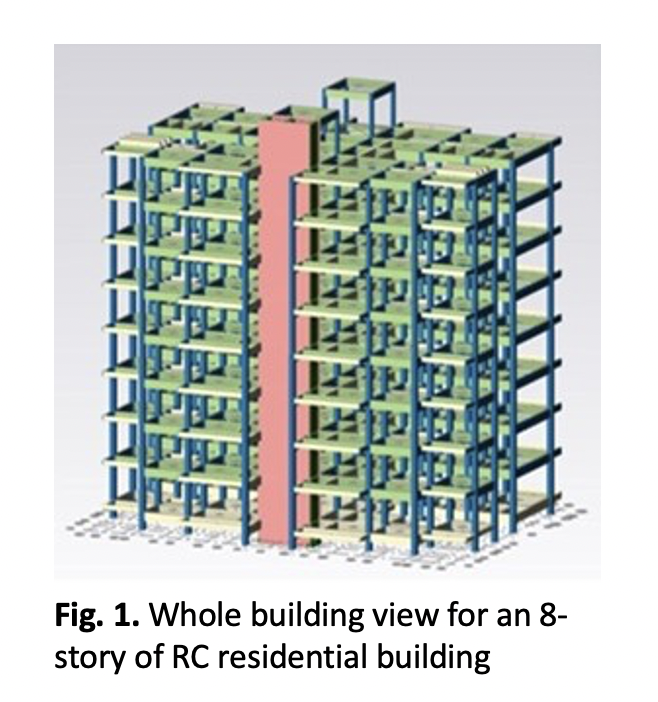
The Sabah region in East Malaysia has been officially classified as a region with active local seismic faults. The region of Ranau and Kundasang saw a significant seismic event on June 5th, 2015, characterised by a magnitude of Mw 6.1. This earthquake resulted in the unfortunate loss of 18 lives and damaged 61 structures. The damages can be attributed to the structural deficiencies that rendered them incapable of withstanding seismic forces. Implementing seismic design is necessary for new buildings to guarantee the general public's safety. Nevertheless, this practice possesses advantages and disadvantages, notably concerning financial implications. The present study aims to investigate the influence of seismic considerations on the expenses associated with steel reinforcement and structural work. This will be achieved using the Malaysian National Annex to Eurocode 8 as a reference. The present study used an 8-story residential building as a representative model. This study examined the two soil types, C and E, in the Sabah region. Various levels of seismicity have been simulated by considering the reference peak ground acceleration, αgR, within the range of 0.04g to 0.16g. The findings indicate that incorporating earthquake considerations into the design process led to an average increase in the utilisation of steel reinforcement by approximately 3% to 110% for beams, columns, and lift cores. Nevertheless, the extent of the rise in expenses related to structural work due to seismic design varied between 1.0% and 18.0%, depending on factors such as soil type and seismic activity levels, compared to the model that did not incorporate seismic considerations. Therefore, using seismic design principles in constructing new buildings merits careful consideration, as it can enhance their resilience and mitigate the financial burden associated with earthquake-related repairs and losses.

Author Biography

Mohd. Irwan Adiyanto, Faculty of Civil Engineering Technology, Universiti Malaysia Pahang Al-Sultan Abdullah, 26300 Gambang , Pahang, Malaysia

mirwan@umpsa.edu.my

Downloads

Published

2026-05-06

Issue

Section

Articles