
Comparative Study of Physical and Chemical Methods for Synthesizing Zinc Oxide - Loaded Polypropylene Non-Woven Fabrics for Photocatalytic Degradation of Benzophenone-3

Authors

  • Nur Alia Farhana Ros Madi Department of Chemical and Environmental Engineering (ChEE), Malaysia–Japan International Institute of Technology, Universiti Teknologi Malaysia, Kuala Lumpur, Malaysia
  • Nurfatehah Wahyuny Che Jusoh Department of Chemical and Environmental Engineering (ChEE), Malaysia–Japan International Institute of Technology, Universiti Teknologi Malaysia, Kuala Lumpur, Malaysia
  • Eleen Dayana Mohamed Isa Advanced Materials Research Group, Center of Hydrogen Energy, Universiti Teknologi Malaysia, Kuala Lumpur, Malaysia
  • Mohamed Mahmoud Nasef Department of Chemical and Environmental Engineering (ChEE), Malaysia–Japan International Institute of Technology, Universiti Teknologi Malaysia, Kuala Lumpur, Malaysia

Keywords:

Benzophenone-3, Zinc Oxide, Photocatalytic, UV Filter, Polypropylene non-woven fabrics

Abstract

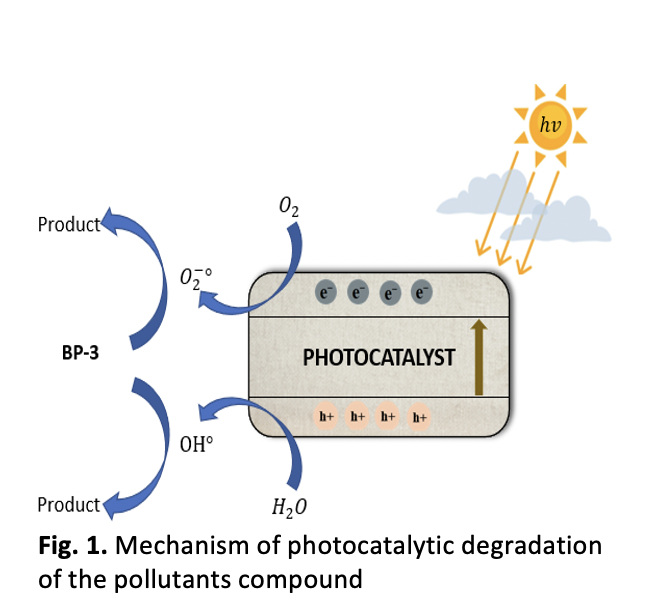
Benzophenone-3 (BP-3) is a well-known UV filtering ingredient in chemical sunscreens and other personal care products. However, high levels of BP-3 in discharged sewage water streams have been linked to reproductive damage, abnormal fetal development, endocrine system disruption, and neurotoxicity in experimental animal models. In this study, zinc oxide (ZnO) loaded on polypropylene non-woven fabrics (PNF) as a photocatalyst was created using two different approaches: the physical method and the chemical method. For physical method, ZnO was loaded onto PNF without addition of other chemical while for chemical method, Iminodiacetic acid (IDA) was added as a polymer ligand to hold onto the connection between PNF and ZnO, which helps improve the efficiency and stability of the synthesis process. The study found that PNF/Zn-IDA which is chemically synthesized was effective in degrading BP-3 by up to 93.38% compared to physically synthesized PNF/ZnO which can only remove 18.46% of BP-3. This approach offers a promising solution for the removal of hazardous chemicals from wastewater streams, contributing to a safer and more sustainable environment.

Downloads

Published

2026-06-17

Issue

Section

Articles