Spatial and Temporal Variability of PM₂.₅ and PM₁₀ in Malaysia: A Comparative Analysis of Selangor and Kelantan (2021–2023)
Keywords:
PM₂.₅, PM₁₀, air quality, spatial variation, temporal trendsAbstract
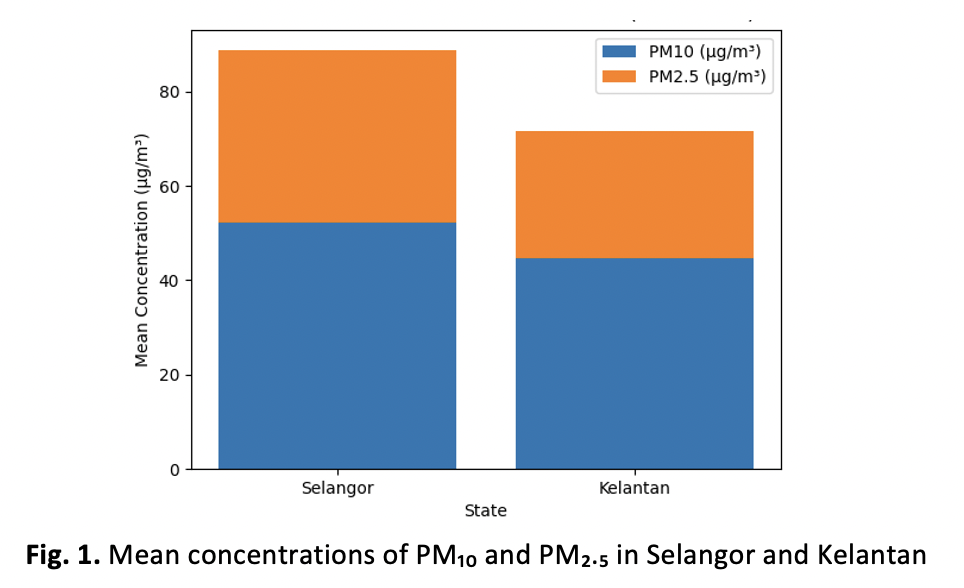
Particulate matter (PM₁₀ and PM₂.₅) remains a critical air quality and public health concern in Malaysia, yet recent comparative analyses across states with contrasting development profiles remain limited. This study examines the spatial and temporal variability of PM concentrations in Selangor and Kelantan from 2021 to 2023, representing highly urbanised-industrial and less-developed regions, respectively. Secondary daily data from seven Continuous Ambient Air Quality Monitoring Stations were analysed using descriptive statistics, non-parametric tests, and compliance assessment against Malaysian Ambient Air Quality Standards (MAAQS 2020) and World Health Organization (WHO 2021) guidelines. Results indicate that Selangor consistently recorded higher mean concentrations than Kelantan, with PM₁₀ and PM₂.₅ levels approximately 17% and 36% greater, respectively. A notable post-pandemic increase in pollution was observed in 2023, with sharper rises in Kelantan, suggesting greater responsiveness to episodic emission influences. Both states exhibited a high PM₂.₅/PM₁₀ ratio (~0.7), indicating a substantial contribution of fine particles, commonly associated with combustion-related processes across differing regional contexts. While all stations complied with national PM₁₀ limits, approximately 90% exceeded the PM₂.₅ standard, and universal non-compliance was observed against WHO guidelines, highlighting potential public health concerns. These findings suggest that fine particulate pollution is a pervasive issue across both developed and less-developed regions, likely influenced by combustion-related sources rather than solely by urban-industrial intensity. The study highlights a critical regulatory gap in current air quality management and underscores the need for consideration of stricter PM₂.₅ control strategies, enhanced monitoring coverage, and closer alignment with health-based international standards.