Water Level Optimization of Sungai Bunus via Artificial Neural Network

Authors

  • H. Ghazali School of Mechanical Engineering, College of Engineering, Universiti Teknologi MARA Shah Alam, Selangor, Malaysia
  • N. S. Khusaini School of Mechanical Engineering, College of Engineering, Universiti Teknologi MARA Shah Alam, Selangor, Malaysia
  • M. H. M. Ramli School of Mechanical Engineering, College of Engineering, Universiti Teknologi MARA Shah Alam, Selangor, Malaysia
  • N. Aziz School of Mechanical Engineering, College of Engineering, Universiti Teknologi MARA Shah Alam, Selangor, Malaysia
  • M. Eilyas School of Mechanical Engineering, College of Engineering, Universiti Teknologi MARA Shah Alam, Selangor, Malaysia
  • Z. Mohamed School of Mechanical Engineering, College of Engineering, Universiti Teknologi MARA Shah Alam, Selangor, Malaysia
  • F. Mohamad School of Mechanical Engineering, College of Engineering, Universiti Teknologi MARA Shah Alam, Selangor, Malaysia
  • H. Rusdin School of Mechanical Engineering, College of Engineering, Universiti Teknologi MARA Shah Alam, Selangor, Malaysia

Keywords:

Artificial Neural Network, Machine Learning, Google Colab, Python

Abstract

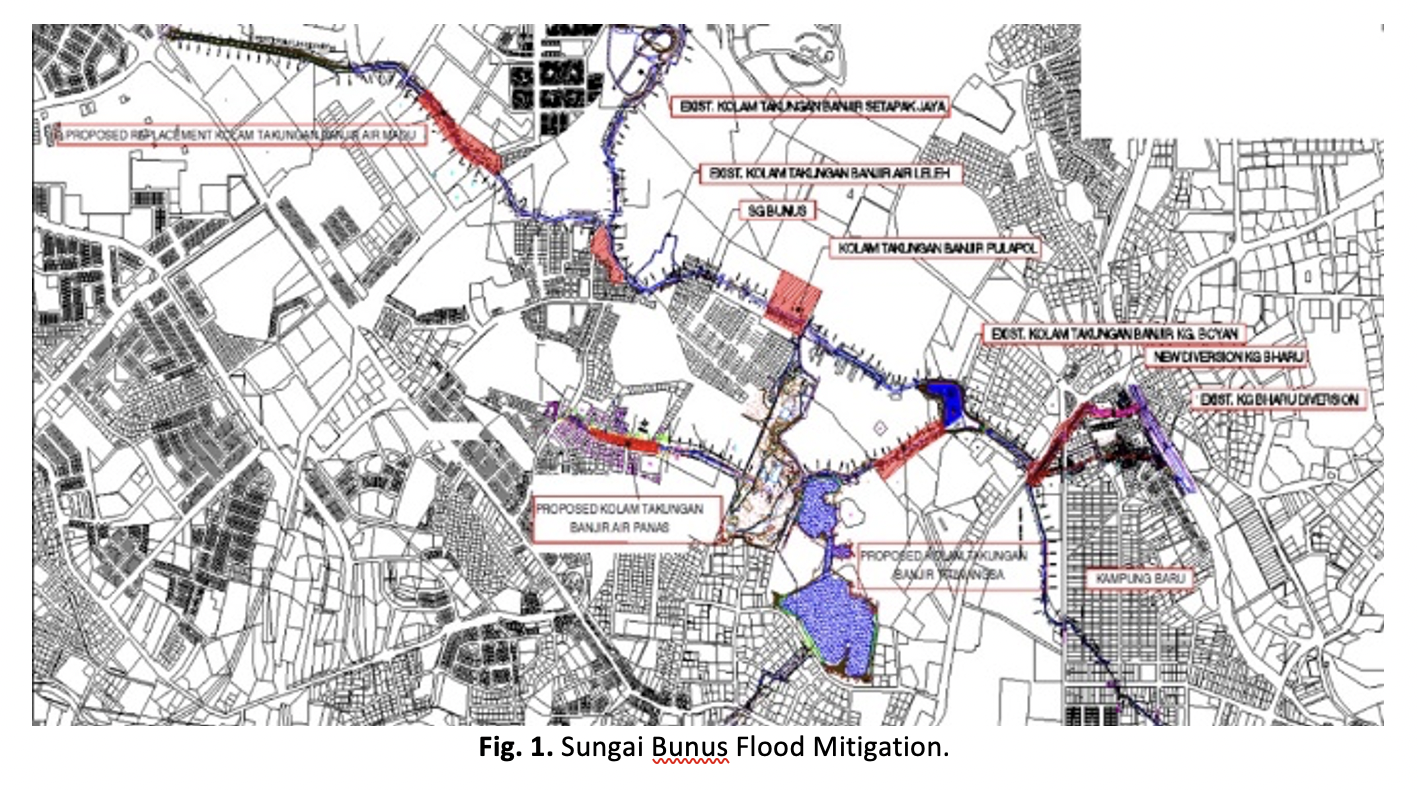
Every part of Malaysia was recently hit by flash floods, and it caused a lot of havoc. This disaster happened because of the lack of capacity of the reservoir to hold water during heavy rains. In this project, we aim to help the Malaysian Drainage and Irrigation Department (DID) by providing artificial intelligence solutions. The solution is to optimise each value of the water level in each Bunus River catchment. DID will have access to monitor and operate the pump gate system in selected areas for specific conditions. The catchment's mechanical infrastructure will be optimised using machine learning, which is an artificial neural network (ANN) method. This approach uses the Python language and the Google Colab platform. The catchment's mechanical infrastructure will be optimised using machine learning, which is an artificial neural network (ANN) method. This approach uses the Python language and the Google Colab platform. An algorithm will be developed to estimate the optimal water level, and the data will be used in real-life situations. The result is that all pump gates for each online storage system can connect to each other. This is to ensure safety around the catchment so that water can be released from upstream to downstream very smoothly.

Downloads

Published

2026-07-18

Issue

Section

Articles