
Walkability Assessment of LRT Stations in Klang Valley Malaysia using GWI Criteria

Authors

  • Mohamad Raduan Kabit Department of Civil Engineering, Faculty of Engineering, Universiti Malaysia Sarawak (UNIMAS), Kota Samarahan, Sarawak, Malaysia
  • Suzana Kho Department of Civil Engineering, Faculty of Engineering, Universiti Malaysia Sarawak (UNIMAS), Kota Samarahan, Sarawak, Malaysia

Keywords:

Walkability index, pedestrian friendliness, LRT stations

Abstract

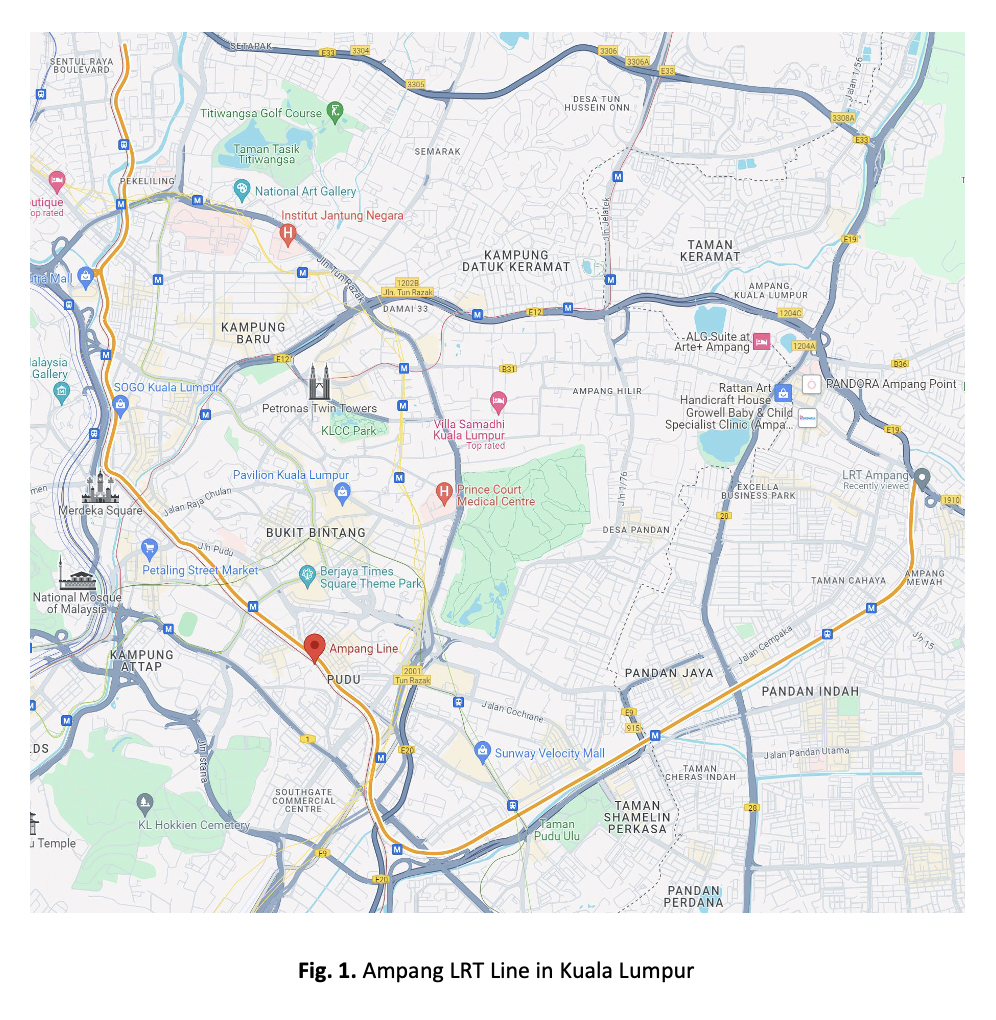
The success of any public transport service, particularly for individuals transitioning from car usage, hinges on the crucial ability to walk or bike safely to and from metro stations. This study aims to evaluate, compare, and rank the walkability of various Light Rail Transit (LRT) stations in Kuala Lumpur by utilizing the Global Walkability Index (GWI), with a specific focus on safety, security, comfort, connectivity, and cultural aspects. Using a questionnaire that includes demographic profiling and Likert scale questions aligned with the GWI approach, the study gathered data from 540 respondents through an online survey conducted at the Ampang Line LRT station. A random sampling approach was employed to guarantee representation and diversity. The gathered data underwent an in-depth analysis utilizing the Global Walkability Index (GWI), encompassing 18 variables across five factors. The findings indicated disparities in walkability across various LRT stations, with specific stations showing elevated walkability index values of 3.2, signifying a high level of pedestrian-friendliness. Notably, stations such as Sentul Timur, Titiwangsa, PWTC, Sultan Ismail, Bandaraya, Masjid Jamek, Plaza Rakyat, Hang Tuah, Pudu, Chan Sow Li, Miharaja, Maluri, Pandan Jaya, Pandan Indah, and Cempaka exhibited conditions conducive to walking, reflecting positive strides in establishing a pedestrian-friendly environment. Conversely, stations like Sentul, Cahaya, and Ampang, having walkability index values of 3.1, demonstrate the least favorable walkability levels, underscoring areas that necessitate enhancements to promote better walkability. The results of this study carry substantial implications for urban planners and policymakers, emphasizing the importance of comprehending walkability for well-informed decisions in infrastructure development. Enhancing walkability not only elevates the overall quality of life but also encourages the utilization of public transportation, thereby fostering environmental sustainability and mitigating traffic congestion.

Author Biography

Mohamad Raduan Kabit, Department of Civil Engineering, Faculty of Engineering, Universiti Malaysia Sarawak (UNIMAS), Kota Samarahan, Sarawak, Malaysia

kraduan@unimas.my

Downloads

Published

2026-07-18

Issue

Section

Articles