Performance Evaluation of Missing Data Treatment Methods for the Large-Scale Evaporation
Keywords:
Evaporation, missing values, data treatment, selected methodAbstract
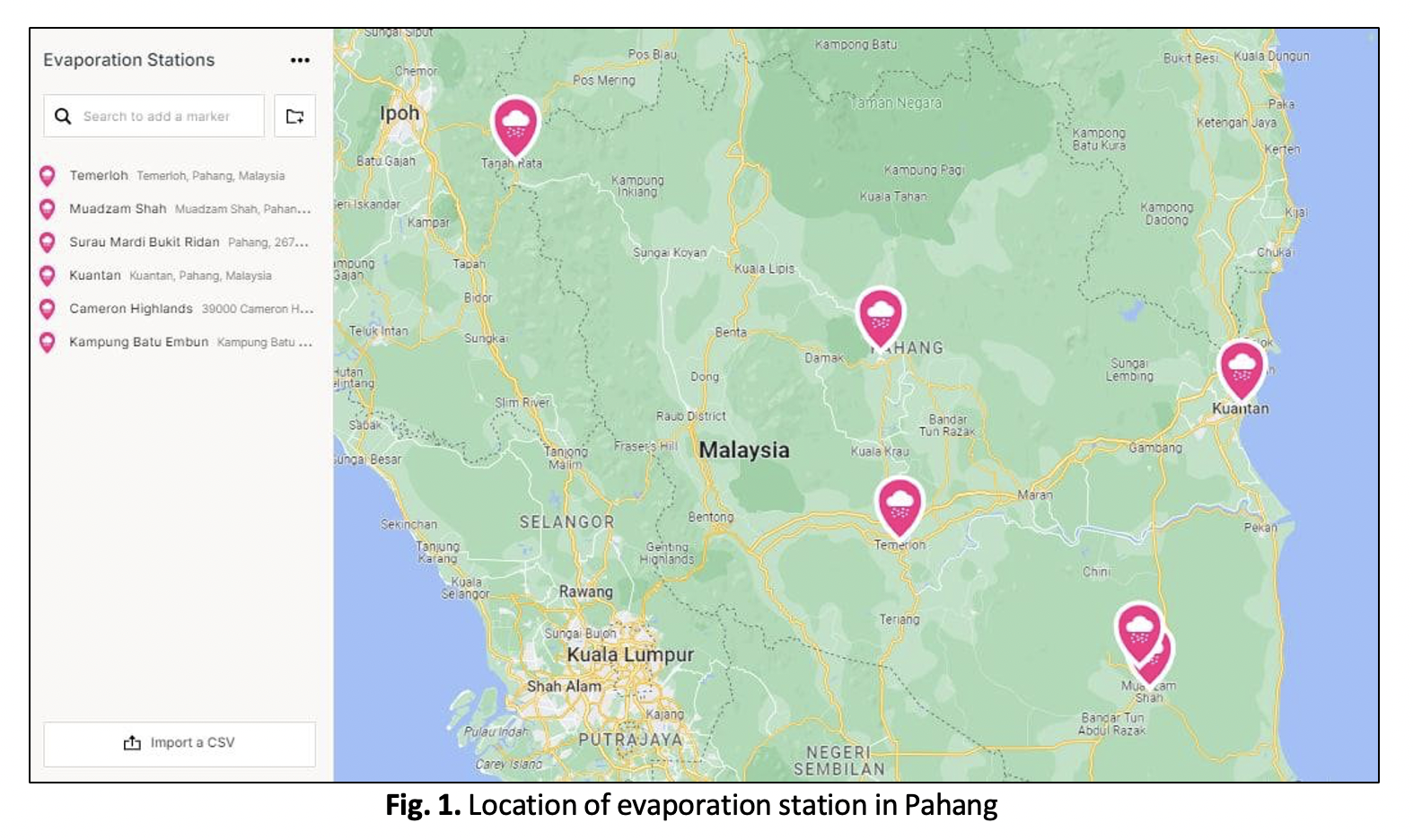
Missing data in evaporation records can cause inaccurate predictions and poor management strategies, leading to significant economic, environmental, and social impacts. This is especially relevant for evaporation datasets in Pahang state because the high amount of missingness might impact the core pattern in the highly variable time series. The best approach for estimating missing evaporation data in various places may differ based on the evaporation pattern and geographical distribution. In this paper, there were 6 evaporation stations in the Pahang state with daily data between 2008 until 2022 (14 years) were used to examine different imputation methods. The selected methods were Arithmetic Mean Method (AMM), Multiple Imputation Technique (MIT) and Normal Ratio Method (NRM). As a result, the purpose of this research was to explore and evaluate three distinct strategies for treating missing data. After investigation, AMM was determined to be the best approach based on root mean square error (RMSE), mean absolute error (MAE), correlation coefficient (r), and percentage of error (% of error).