
Development and Preliminary Evaluation of a VR-BIM Integration Framework for Decision-Making and Workflow Optimisation in Construction Projects

Authors

  • Majdi Alshaikheid Advanced Manufacturing Research Center (AMREC), Department of Mechanical and Manufacturing Engineering, Faculty of Engineering Universiti Putra Malaysia, 43400 UPM Serdang, Selangor Darul Ehsan, Malaysia
  • Faieza Abdul Aziz Advanced Manufacturing Research Center (AMREC), Department of Mechanical and Manufacturing Engineering, Faculty of Engineering Universiti Putra Malaysia, 43400 UPM Serdang, Selangor Darul Ehsan, Malaysia
  • Siti Azfanizam Ahmad Advanced Manufacturing Research Center (AMREC), Department of Mechanical and Manufacturing Engineering, Faculty of Engineering Universiti Putra Malaysia, 43400 UPM Serdang, Selangor Darul Ehsan, Malaysia
  • Sharafiz Abdul Rahim Advanced Manufacturing Research Center (AMREC), Department of Mechanical and Manufacturing Engineering, Faculty of Engineering Universiti Putra Malaysia, 43400 UPM Serdang, Selangor Darul Ehsan, Malaysia

DOI:

https://doi.org/10.37934/araset.62.5.3950

Keywords:

Building Information Modelling (BIM), Virtual Reality (VR), construction coordination, decision-making, workflow optimisation, digital construction

Abstract

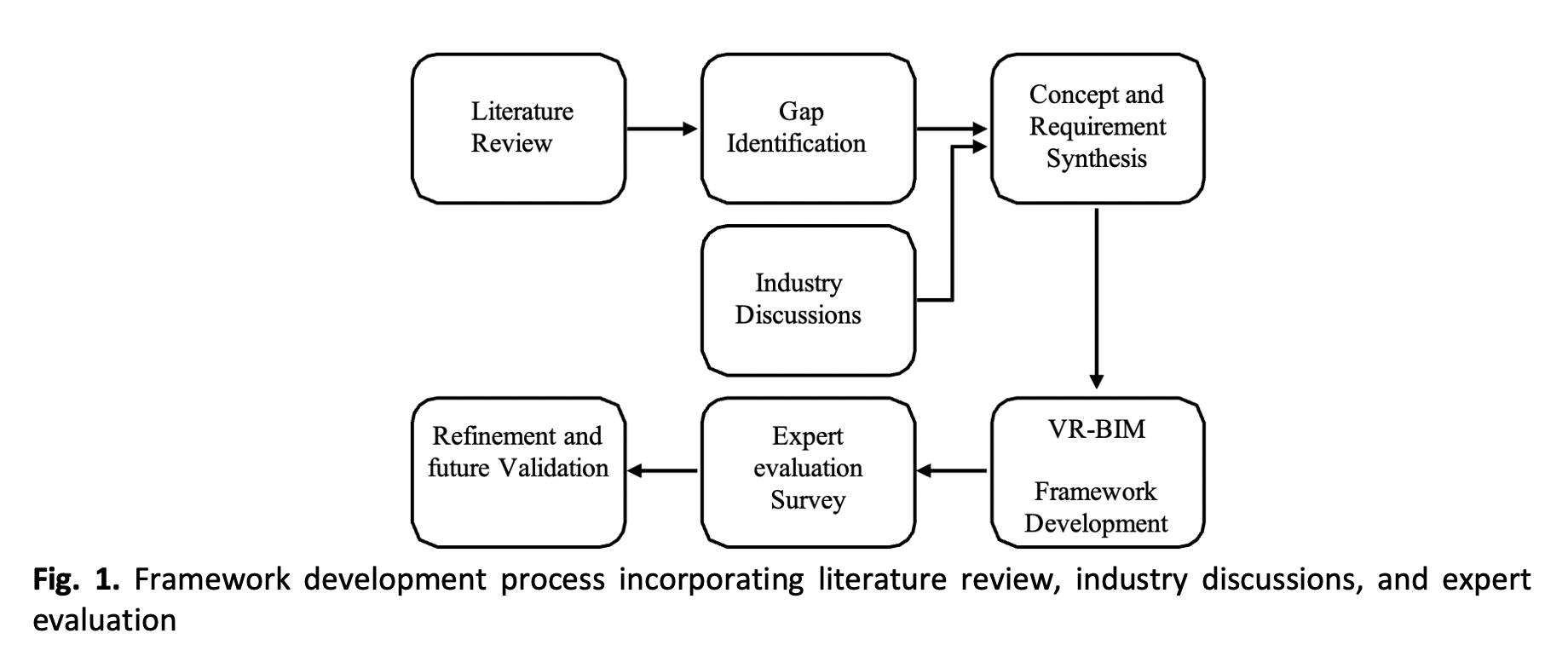
Construction projects have long suffered from communication gaps and coordination challenges, resulting in design conflicts, inefficient decision-making, and rework. This study aimed to develop and conduct a preliminary evaluation of a Virtual Reality (VR)-Building Information Modelling (BIM) integration framework to support decision-making and workflow optimisation in construction projects. The proposed framework was developed through a structured literature review and enriched by expert perspectives obtained through discussions with construction professionals. The framework comprised six interconnected layers linking digital project information, immersive visualisation, stakeholder interaction, decision-making, and workflow-related outcomes. A preliminary evaluation was conducted through an expert survey involving 31 experienced construction professionals in the United Arab Emirates. Respondents generally considered the framework clear, logically organised, and useful for improving project understanding, multidisciplinary coordination, communication, and decision-making during project reviews. Overall, respondents supported the framework but expressed moderate concerns regarding its practical implementation. The survey results suggested that the framework could support construction coordination and review activities, although further empirical validation remained necessary. This study contributes a structured VR-BIM integration framework together with an initial expert evaluation. The proposed framework provides a basis for future empirical validation and implementation in construction projects.

Author Biographies

Majdi Alshaikheid, Advanced Manufacturing Research Center (AMREC), Department of Mechanical and Manufacturing Engineering, Faculty of Engineering Universiti Putra Malaysia, 43400 UPM Serdang, Selangor Darul Ehsan, Malaysia

Faieza Abdul Aziz, Advanced Manufacturing Research Center (AMREC), Department of Mechanical and Manufacturing Engineering, Faculty of Engineering Universiti Putra Malaysia, 43400 UPM Serdang, Selangor Darul Ehsan, Malaysia

faieza@upm.edu.my

Downloads

Published

2026-08-13

Issue

Section

Articles