Treatment Compliance and Associated Sociodemographic Factors among Haemodialysis Patients in Sabah A Cross Sectional Analysis
Keywords:
Adherence, haemodialysis, Sabah, sociodemographic factors, treatment complianceAbstract
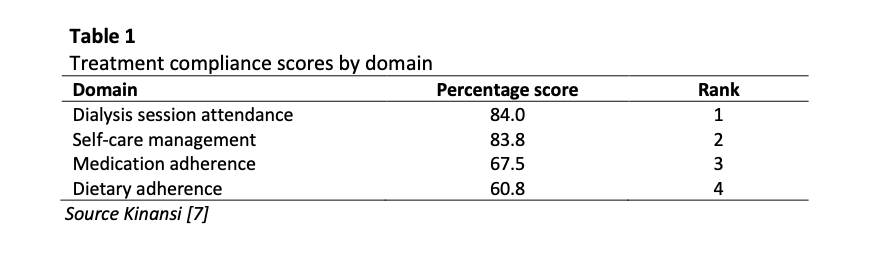
Haemodialysis requires sustained adherence to treatment sessions, medicines, fluid limits, dietary guidance, and self-care, but these behaviours may be constrained by health, household resources, and access to care. Objective: To assess treatment compliance and its sociodemographic and clinical associations among adults receiving maintenance haemodialysis in Sabah. This single-centre cross-sectional census invited all 80 active patients at a tertiary referral centre in Kota Kinabalu; 68 completed the study. A 27-item instrument assessed five compliance domains. Total scores ranged from 0 to 27, with scores of 22 to 27 classified as high compliance. Descriptive statistics, group comparisons, effect sizes, and Pearson correlations were calculated. Mean compliance was 18.3 of 27 points (67.8%), and 27.9% achieved high compliance. Attendance (84.0%) and self-care (83.8%) exceeded medication adherence (67.5%), dietary adherence (60.8%), and fluid restriction (56.7%). The largest group differences involved employment (d = 0.94, p = 0.001), tertiary education (d = 0.84, p = 0.003), and marital status (d = 0.76, p = 0.003). Younger age, household income below RM1,000, and travel beyond 30 km were also associated with lower scores. Interdialytic weight gain correlated inversely with fluid-compliance scores (r = -0.543, p < 0.001), providing convergent evidence for the fluid domain rather than validation of the full questionnaire. The main adherence gaps involved daily fluid and dietary decisions rather than attendance. The associated social and access factors identify groups who may need practical, culturally appropriate support, but the single-centre cross-sectional design does not establish causality or broad generalisability.