Occupational Accidents and Safety Training Gaps among Assistant Medical Officers in Malaysia A Cross Sectional Study in Perak
Keywords:
Assistant medical officers, occupational accidents, safety training, Malaysia, cross-sectional studyAbstract
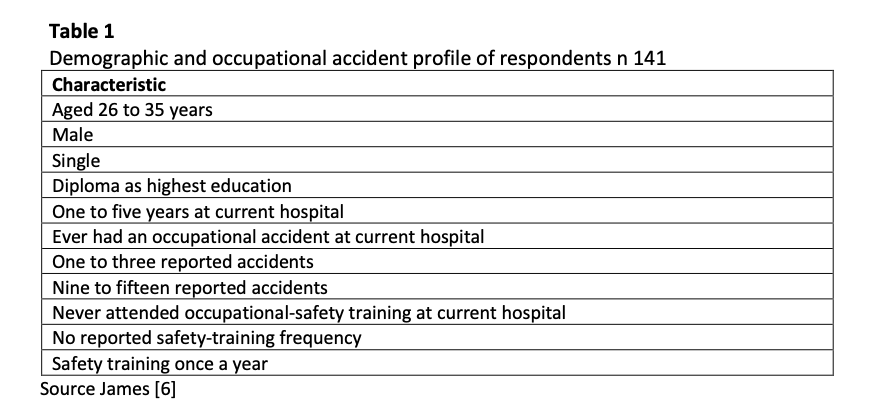
Assistant Medical Officers perform invasive procedures that may expose them to occupational accidents, yet their accident history and safety-training exposure in Malaysia are not well described. This cross-sectional descriptive study surveyed 141 Assistant Medical Officers at a tertiary hospital in Ipoh, Perak, representing an 82% usable response rate. The questionnaire recorded whether respondents had experienced an occupational accident at the current hospital, the number of reported accidents, safety-training exposure, and perceptions of safety-management practices. Overall, 49.6% reported at least one occupational accident at the current hospital. Reported accident counts ranged from one to fifteen, including 12.1% in the nine-to-fifteen category, but the questionnaire did not identify accident types, dates, severity, reporting status, or whether events involved needlesticks or sharps. In addition, 51.8% had never attended occupational-safety training at the hospital, and 40.4% reported training once a year. Safety promotion and policies had the lowest practice mean (3.20), whereas safety self-efficacy and safety compliance both had means of 4.03. These descriptive findings identify gaps in documented training exposure and safety-promotion perceptions but do not establish that training gaps caused the reported accidents. The results support reviewing induction and refresher training, incident-reporting processes, and safety communication at the study hospital. Multi-centre studies using verified incident records and defined exposure periods are needed to assess associations and guide intervention priorities.